AI-powered research & learning

Your mind is a Tree,
not a Waterfall

SideQuestly is a non-linear research and thinking tool. Branch conversations, annotate documents, create flashcards — all in one workspace designed for how you actually think.

Everything you need for deep research

Built for learners and researchers who think in multiple directions at once.

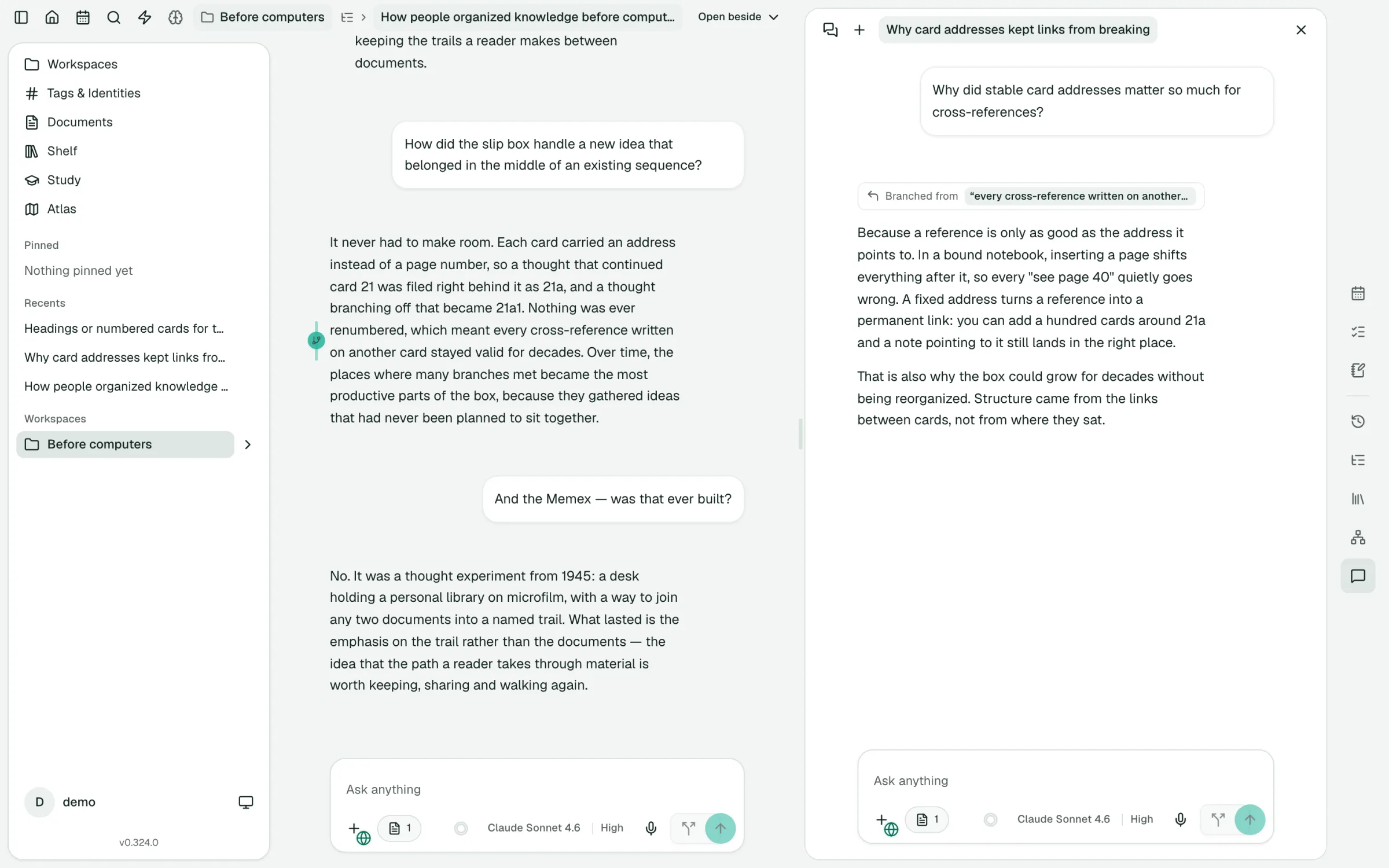
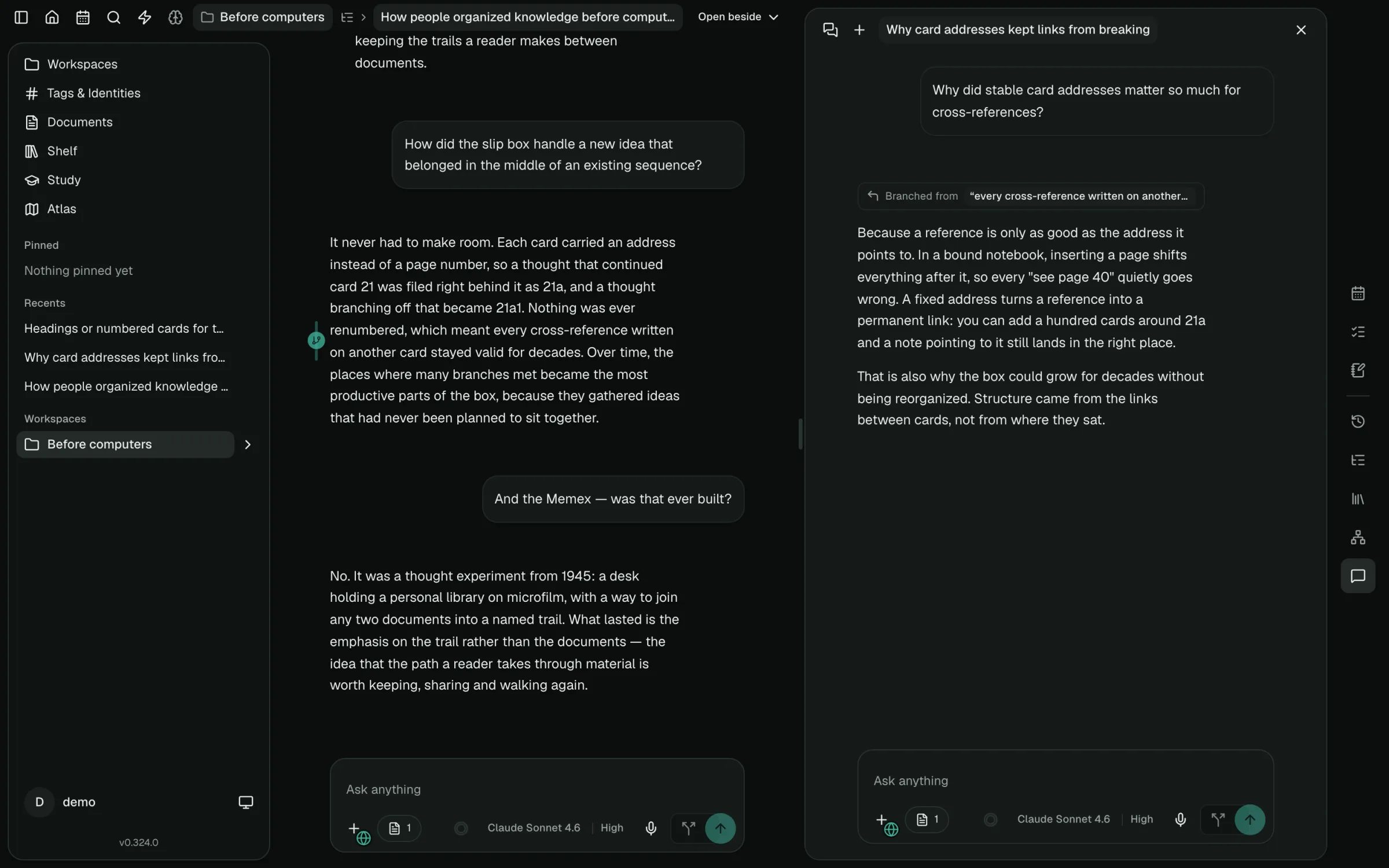
Branching Conversations
Branch from any message or text selection. Follow tangents without losing your main thread — every branch is first-class.
Research Mode
Document-based research with PDFs and chat side-by-side. Select which documents provide context for each conversation.
Document Viewer
Interactive PDF viewer with annotations, highlights, and in-document search. Create flashcards directly from your highlights.
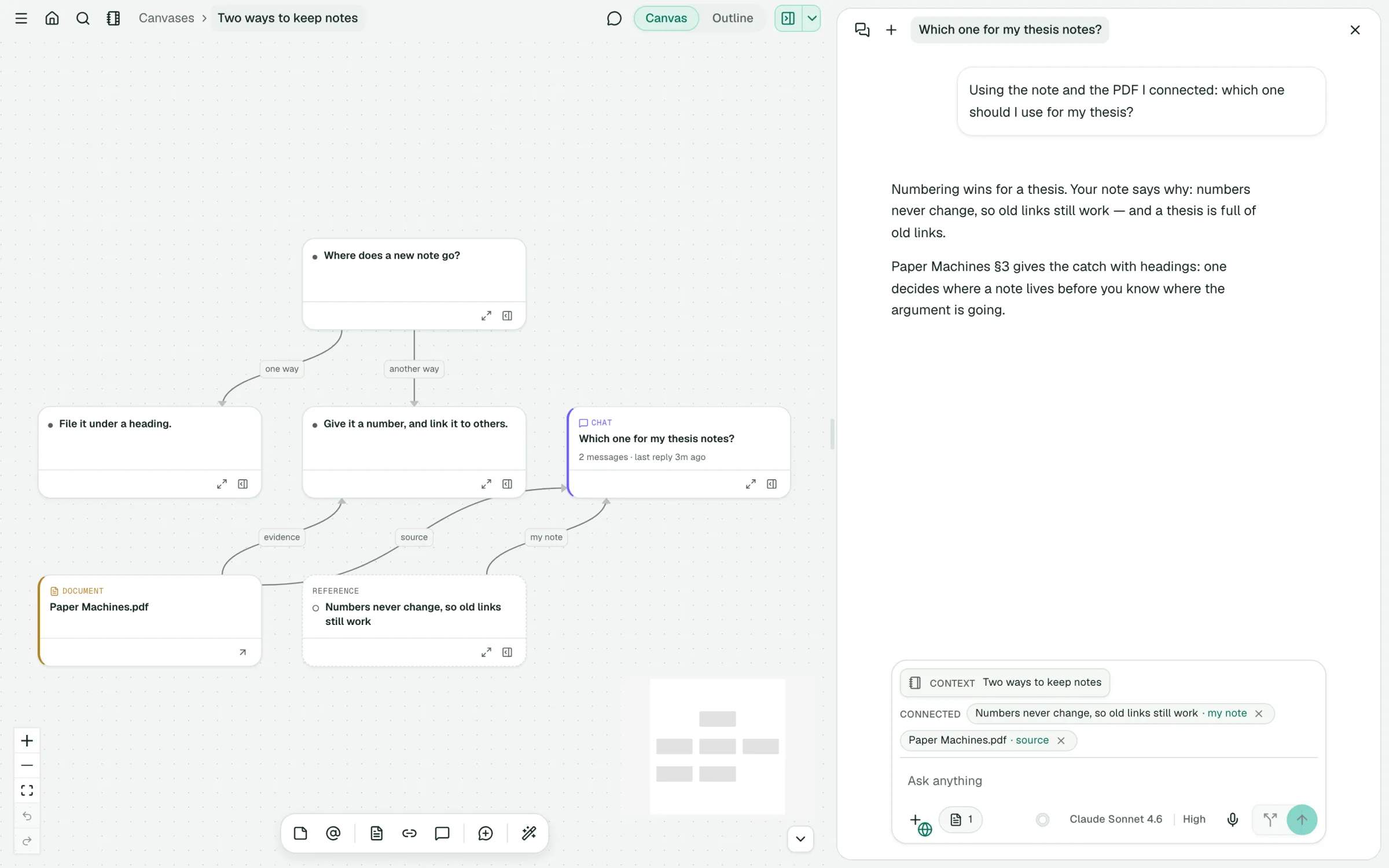
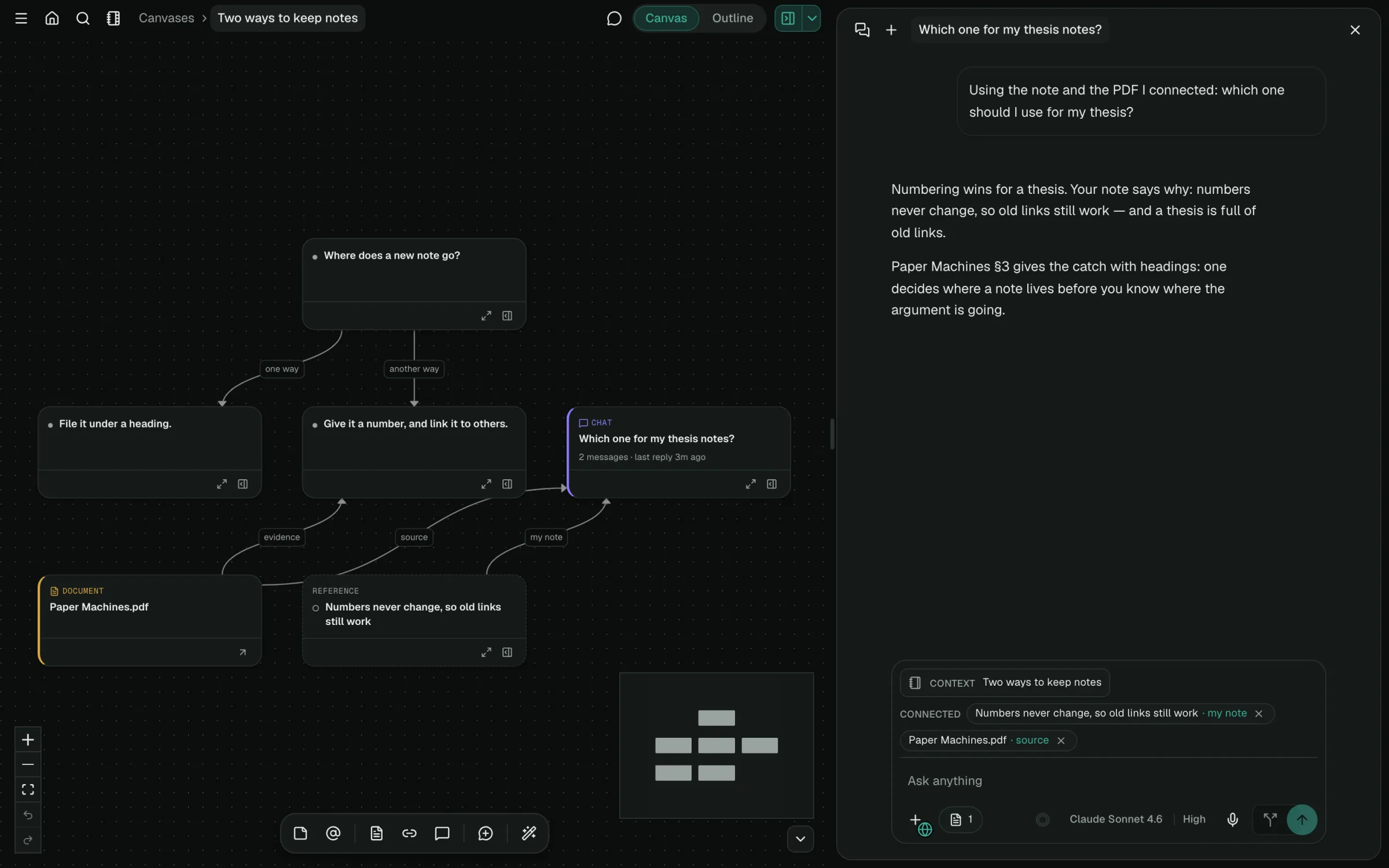
Visual Canvases
Map ideas and connections visually on a canvas. See your thinking beyond text alone.
Documents & RAG
Upload PDFs, automatically chunk and index them, then ask AI-powered questions grounded in your documents.
Workspaces
Organize chats and documents into thematic workspaces. Keep your research structured and accessible.
SRS Flashcards
Cards from your annotations and your blurts. SM-2 schedules the reviews. Study Mode does the rest.
Three-Column Layout
Resizable panels with tab navigation. Keep multiple conversations and documents open simultaneously.

Study Mode

A better way to remember what you read

Two retrieval modes, built into your reading flow. Backed by the science of how memory actually works.

After every page, a quiet prompt to practice.

Two retrieval modes

Pick the one that fits the moment.

Recognition or free recall. Two minutes or ten. Either or both. The card stays until you dismiss it.

Recognition

Three to five questions, ninety seconds.

Pick the best of four. Each answer reveals the explanation. For the moments when you have two minutes and want to know whether the page actually landed.

Marsh, Roediger & Karpicke (2007) — multiple-choice tests measurably improve later recall.

Free recall

Write what you remember. We grade against the page.

A blank textarea, optional voice. We compare your recall to the source and split it into Got / Fuzzy / Missed. The gaps become flashcards in your deck.

Roediger & Karpicke (2006) — testing once after reading beats re-reading three times on a delayed test.

From gap to flashcard

The gaps don’t get lost — they become tomorrow’s review.

When you blurt, we draft flashcards from the things you missed. Tweak, skip, or keep them. They land in your spaced-repetition deck and we schedule the rest.

Start your research journey

Join SideQuestly and explore topics the way your mind works — in branches, not in lines.